Behaviour Therapy
Children express their needs, emotions, and challenges in many different ways. Sometimes, behaviours such as frequent tantrums, difficulty following routines, aggression, emotional outbursts, poor attention, or challenges with social interaction can make everyday life difficult for both children and families.
At EVE Child Development Centre, Behaviour Therapy focuses on understanding the reasons behind a child’s behaviour and helping them develop more positive, functional, and age-appropriate skills.
EVE CDC provides Behaviour Therapy in Kollam and Kochi, along with online parent consultations, behaviour guidance, and follow-up sessions, helping families access professional support based on their child’s individual needs.

What Is Behaviour Therapy for Children?
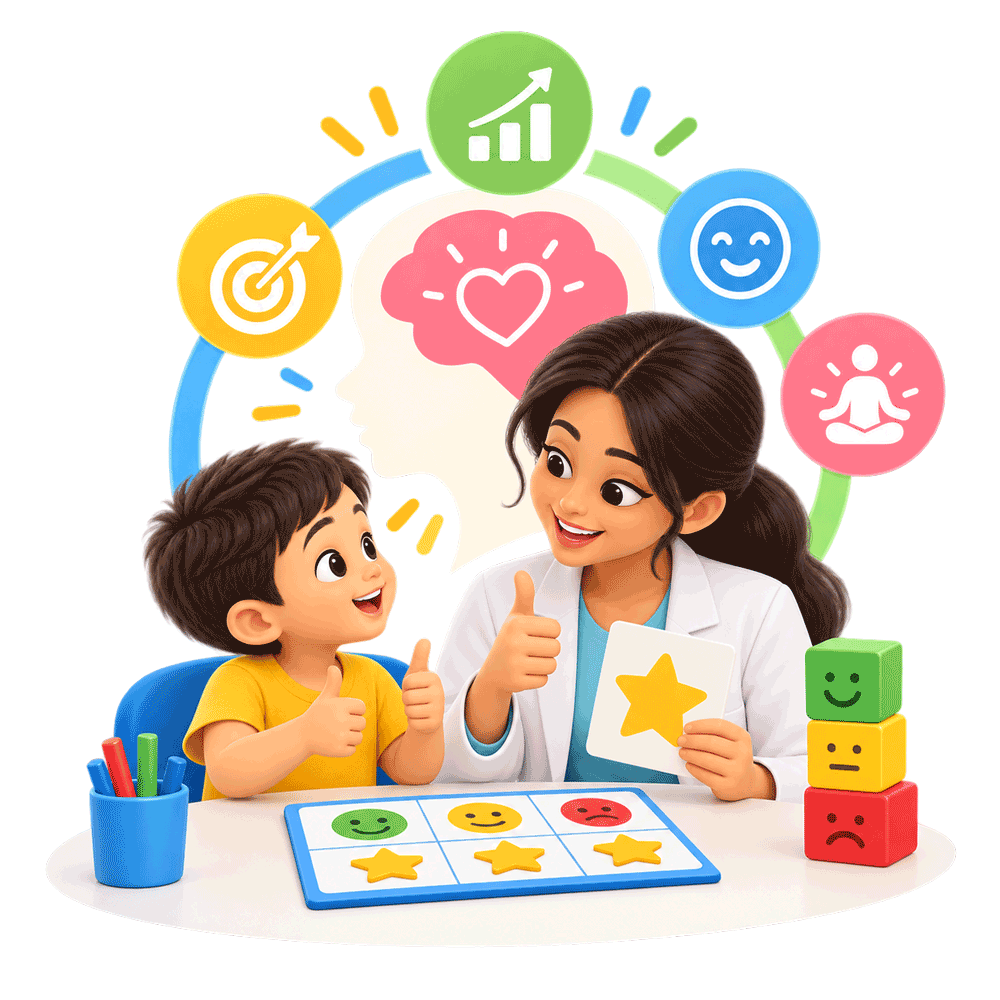
Behaviour Therapy is an approach that helps children develop positive behaviours, emotional regulation, communication, social interaction, and everyday life skills.
Rather than simply trying to stop a difficult behaviour, therapy focuses on understanding:
- What may be triggering the behaviour
- What the child may be trying to communicate
- What happens before and after the behaviour
- Which skills the child may still need to develop
- How parents and caregivers can respond consistently
The goal is to support meaningful and lasting improvements in the child’s everyday functioning.
How Do I Know If My Child May Need Behaviour Therapy?
Every child may have occasional tantrums, frustration, or difficulty following instructions.
Parents may consider a professional behavioural assessment when certain behaviours become frequent, intense, or begin affecting the child’s daily life, learning, relationships, or family routines.
Some signs may include:
- Frequent or intense tantrums
- Difficulty managing frustration
- Aggressive behaviour such as hitting, kicking, or biting
- Difficulty following instructions
- Frequent refusal or oppositional behaviour
- Difficulty adapting to changes in routin
- Challenges with attention and task completion
- Difficulty waiting or taking turns
- Poor emotional regulation
- Difficulty communicating needs appropriately
- Repetitive or challenging behaviours
- Difficulty interacting with peers
- Difficulty following classroom routines
- Behavioural challenges associated with developmental delays, autism, or ADHD
A professional assessment can help identify why a behaviour may be occurring and what type of support may be appropriate.
Behaviour Therapy Services at EVE CDC
At EVE Child Development Centre, behaviour support is individualized according to the child’s age, developmental needs, strengths, challenges, and family concerns.
Therapy may focus on different areas depending on the child.
Children sometimes find it difficult to understand or manage strong emotions.
Behaviour Therapy may help children gradually develop skills for:
- Recognising emotions
- Expressing feelings appropriately
- Managing frustration
- Coping with disappointment
- Calming after emotional distress
- Responding to difficult situations more effectively
Therapists may also guide parents on strategies that can support emotional regulation at home.
Challenging behaviours often serve a purpose or communicate an unmet need.
Therapy focuses on understanding the possible reasons behind behaviours such as:
- Tantrums
- Aggression
- Screaming
- Throwing objects
- Refusing activities
- Difficulty transitioning between tasks
- Repetitive disruptive behaviours
The aim is not simply to suppress behaviour, but to teach more appropriate ways for the child to communicate, participate, and respond.
Some children may find it difficult to remain engaged with activities or complete age-appropriate tasks.
Behavioural support can help develop skills such as:
- Sitting for activities
- Following simple instructions
- Completing tasks
- Waiting
- Taking turns
- Moving between activities
- Following routines
- Increasing participation in learning and play
Goals are adapted according to the child’s developmental level.
Social interaction involves many skills that children develop over time.
Behaviour Therapy may support areas such as:
- Sharing
- Taking turns
- Waiting
- Joining activities
- Understanding social boundaries
- Responding appropriately to others
- Playing with peers
- Following social rules
- Managing conflicts
These skills can support children in home, school, and community environments.
Sometimes behavioural challenges occur because a child has difficulty communicating what they want, need, or feel.
For example, a child who cannot express that they need a break may communicate through crying, screaming, or refusing an activity.
At EVE CDC, the team considers communication when understanding behaviour. When appropriate, Behaviour Therapy can work alongside Speech Therapy to help children